The Winter’s Tale
Much more than the sum of its jealous, sexually threatened, angry, paranoid, violently sundering, new beginning, innocent, open, reconciliatory, and magical parts, The Winter’s Tale is to do with searching for redemption or reconciliation after something absolutely horrific has taken place. I wanted to direct this play in Buffalo in 2024 because I could think of at least three local tragic moments that the community is very much still processing: the racist shooting at Tops Market on May 14, 2022, the deadly Christmas storm that same year, and the collapse of Damar Hamlin on the field during a play-off game (fortunately, thanks to the Buffalo Bills’ medical team and the Cincinnati doctors, Hamlin eventually recovered and returned to play). What do we do next? How do we process the horrific, acknowledge the losses, and find our way forward together? Is forgiveness possible? What does accountability look like?
The Winter’s Tale is shattered into three pieces: a brief moment of peace and right relationship, shattered by Leontes’ sudden and unprovoked jealousy, spirals towards tragedy and despair. The play then pivots to a brighter time and place where celebration, renewal, and young love make almost anything seem possible.
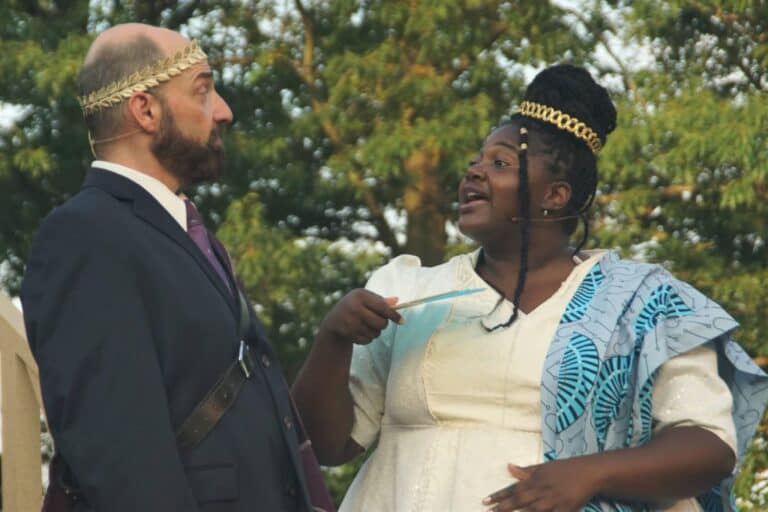
In her review, Melinda Miller wrote, “Watching that is incredibly chilling. When actor Daniel Lendzian has his Act I Scene 2 breakdown as King Leontes, overcome with the (false) suspicion that his wife has been unfaithful to him, summer stands still on Shakespeare Hill. The picnicking audience seems stunned as the family love and friendly fellowship that opened the play suddenly evaporate.
“This opens the door for a most powerful verbal takedown of Leontes by Annette Daniels Taylor as the heart-broken Paulina, a lady-in-waiting to the queen. She is a force of grief and fury as she lambastes the king for his tyranny and the monstrous betrayal of his friend, his wife and his daughter.
“Director Kate Powers keeps stage trickery to a minimum throughout, making it easier to track the kind of convoluted plot.”
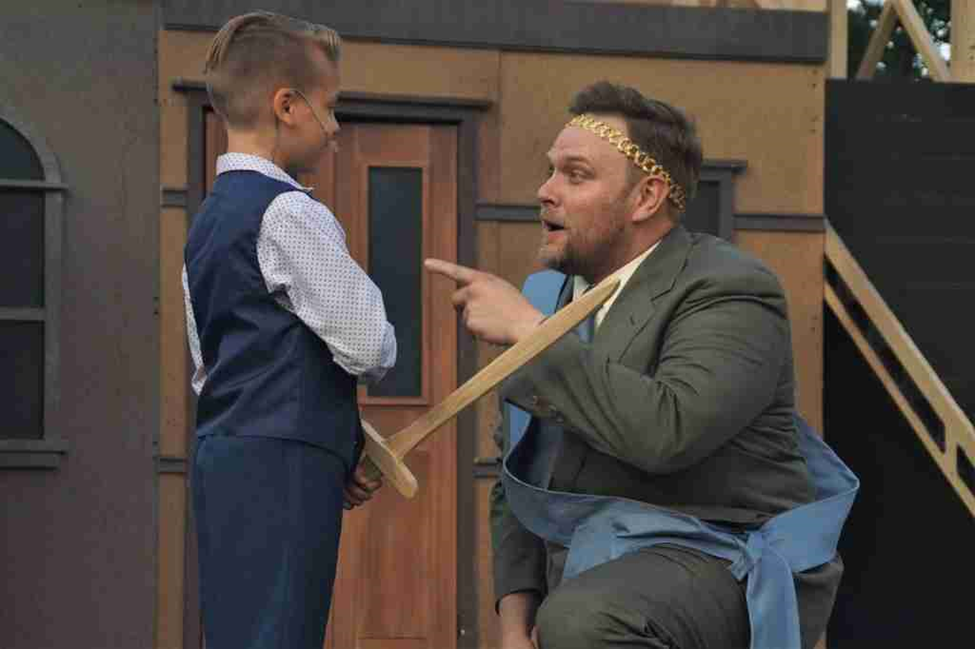
The women are the moral compass of this play. While they are still at the mercy of the caprices of men, Paulina, Hermione and Perdita echo one another, creating an expressive link among the characters and illuminating the tender, protective and sexual strengths inherent in the language of the play. Hermione is grace and dignity in the face of her husband’s sudden violent rejection and public humiliation of her; she “never wished to see [Leontes] sorry.” Paulina embodies fidelity and reconciliation, through her commitment to the memory of those lost to Leontes’ violent jealousy and through her caretaking of both Leontes and the memory of his good queen: “These dangerous, unsafe lunes i’th’King, beshrew them! He must be told on’t, and he shall; the office becomes a woman best.” Perdita, in the face of Polixenes’ angry threats, is “not much afeared” and tells Florizel that she’ll “queen it no inch farther, but milk my ewes and weep.”
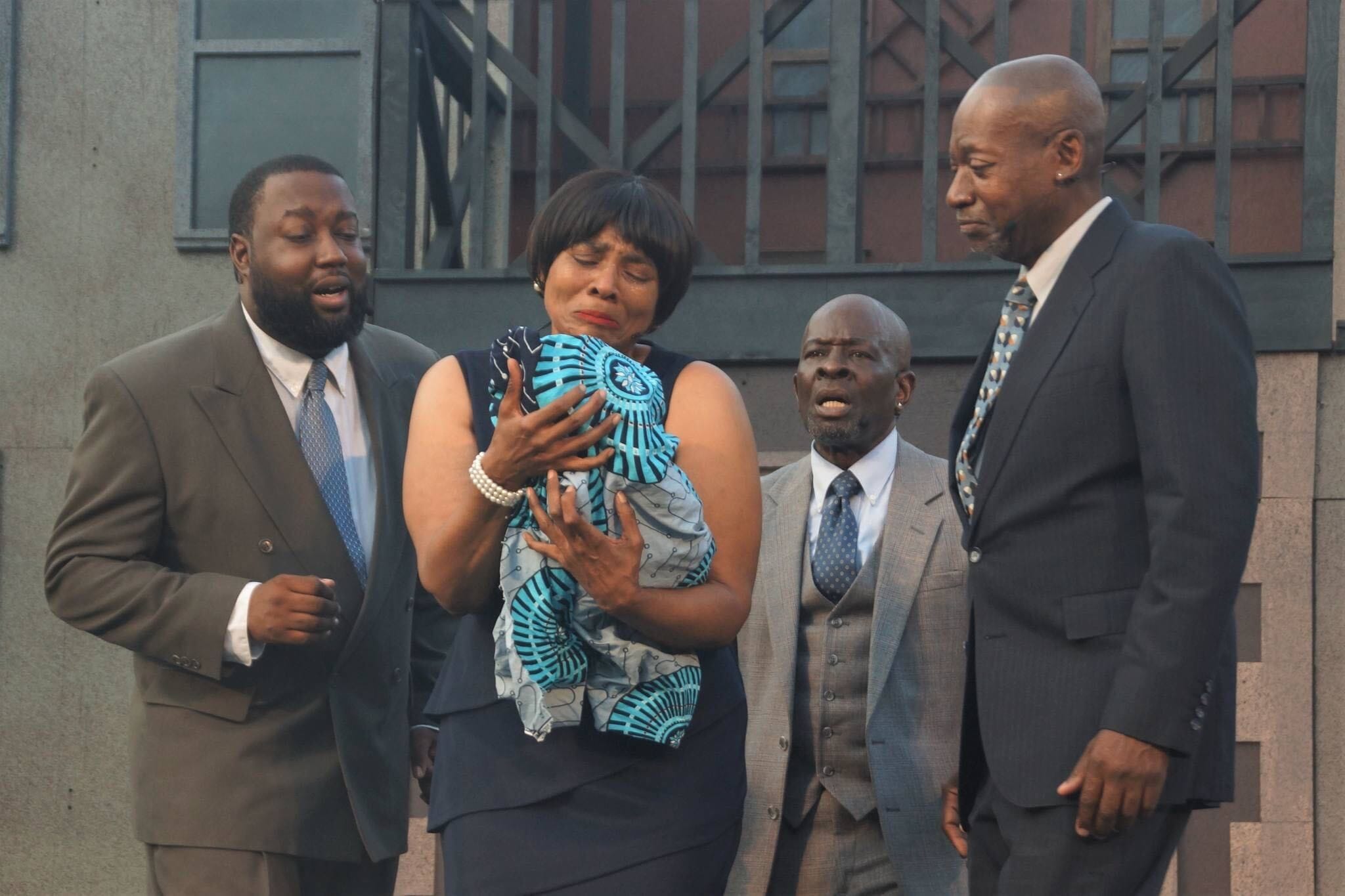
In his review for Buffalo Rising, Anthony Higgins wrote, “Mastering the play’s split personality and segue from grim darkness to sunshine is quite a challenge. The Shakespeare in Delaware Park company certainly deserves praise for managing it so gracefully, in this new production of The Winter’s Tale.
“The director, Kate Powers, and a cast of seasoned WNY actors are especially attuned to the more problematic first half of the divided plot. This production features prominently the two themes that make this play a powerful and moving story: Jealousy with its sorrowful mood in the beginning half and redemption with a jovial tone in the later half. This skillful and effective production accepts that fairy-tale tradition, and the artifice of a back-from-the-dead ending. We’ve crossed over from tragedy to classic comedy, and it’s been a most joyful journey.”